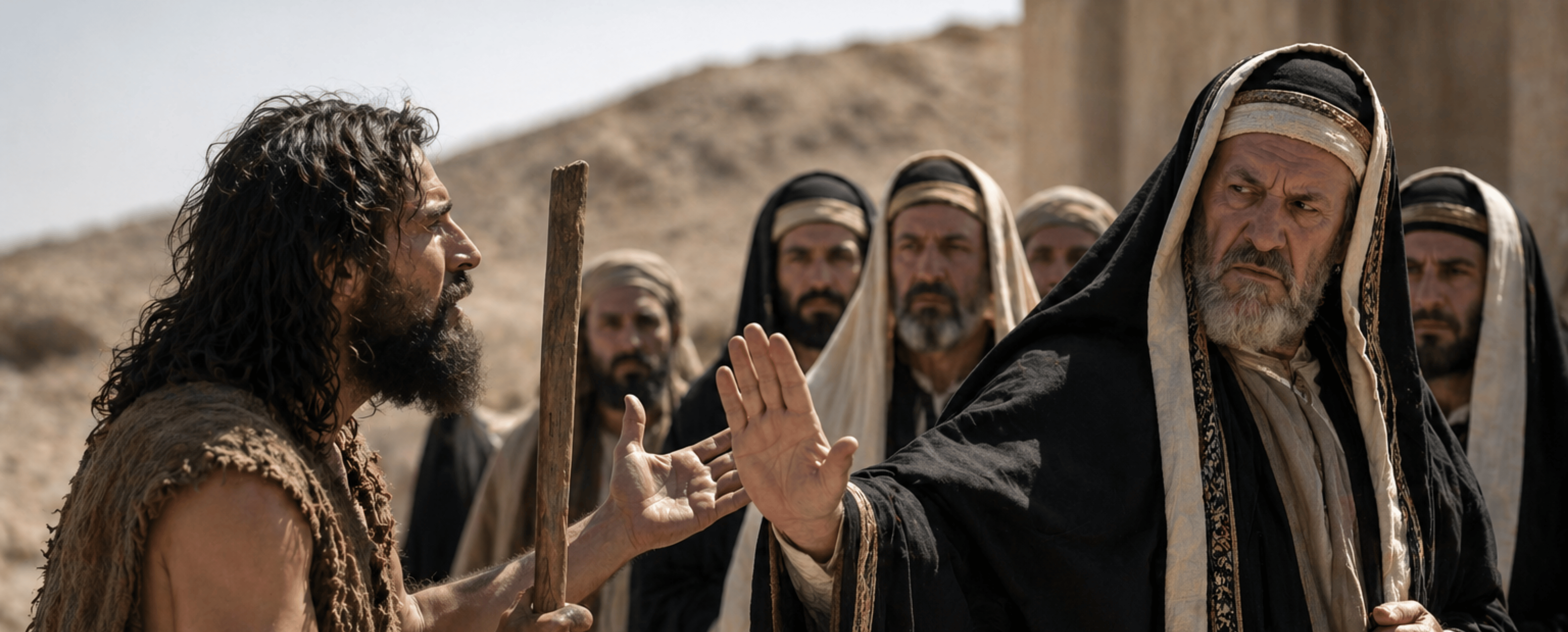
In Gospel of Matthew chapter 11, Jesus gives us a striking picture of two ministries that came from the same heaven, yet were received with the same resistance.
One was a fiery message aimed at crucifying sin.
The other was a fiery message aimed at unconditionally loving and fellowshipping with the sinner.
One was the ministry of John the Baptist, a voice in the wilderness, calling people to repent, to turn, to prepare their hearts for God. His message was weighty, piercing, and confrontational. It exposed sin and beckoned people into transformation.
The other was the ministry of Jesus Christ, God in the flesh, eating with sinners, celebrating at tables, inviting people into joy, freedom, and life in the Spirit. His message was full of grace, full of life, and full of invitation.
Two expressions.
One call from heaven.
And yet, the religious leaders rejected both.
Jesus says it plainly:
“For John came neither eating nor drinking… and the Son of Man came eating and drinking…” Matthew 11:18 to 19
Then He exposes their posture:
“We played the pipe for you, and you did not dance; we sang a dirge, and you did not mourn.”
John came fasting, and they said he was demonized.
Jesus came feasting, and they called Him a glutton and a drunkard.
It did not matter what heaven released, they had already decided they would not respond.
Here is the truth:
To the religious, the message of repentance is too harsh.
And the message of Jesus is too progressive.
Conviction offends them.
Grace offends them.
Because both require surrender.
Religion refuses to bow low and refuses to lift hands high.
This is the subtle danger of religion. It is not a pursuit of truth, it is the protection of personal opinion. It creates a posture where the heart is no longer teachable, no longer tender, no longer responsive to the Spirit of God.
When conviction comes, it is rejected.
When joy comes, it is resisted.
Religion resists repentance and is uncomfortable with rejoicing.
And if we are honest, this is not just them.
This lives in all of us if left unchecked.
You can see it in the room.
One person feels conviction and immediately shuts down, deflects, or explains it away.
Another sees expressive worship, joy, freedom, dancing, and folds their arms.
Not because God is not moving
but because their heart has already decided how He is allowed to move.
Those entangled in religion will often label the prophets of their day as demonic no matter what they do.
If a voice rises with conviction, calling people to repent and bear fruit in keeping with repentance, they are labeled harsh, arrogant, or condemning.
If a voice rises with joy, inviting people to dance, celebrate, and encounter the love of God with freedom and expression, they are labeled extreme, emotional, or even dangerous.
Conviction is rejected.
Celebration is rejected.
Because both threaten control.
If you are unwilling to repent at the sound of conviction, you will also be unable to rejoice at the invitation of grace. The same pride that keeps you from bowing low will keep you from lifting your hands high.
Humility is the doorway to both.
Religion, however, convinces a person they have already arrived. It leaves no room for growth, no room for transformation, and no room for wonder.
So when a new move of God comes
when a fresh expression of truth is revealed
when the Spirit begins to move in an unfamiliar way
it is not received, it is resisted.
And often, it is weaponized.
What was meant to bring life is labeled as deception.
What was meant to awaken hearts is criticized and torn down.
Not because it is wrong, but because it challenges what has already been decided.
This pattern is not new. It is ancient.
This is the ministry of the Pharisees.
And it is still alive today.
Jesus Himself warned His disciples to take great care that the thinking of the Pharisees would not work its way into their minds. And we are just as prone, just as vulnerable, to allow that same leaven to influence our thinking. Not because we intend to resist God, but because pride quietly convinces us we already understand Him.
When we begin to value the traditions of men over truth
when we cling to what is familiar instead of what is alive
when we protect what we think we know rather than surrender to what God is revealing
we drift into the very thing Jesus warned against.
And instead of living with childlike wonder and abandoned faith, we settle into controlled, predictable religion, missing the very kingdom of heaven we claim to seek.
Because heaven is still speaking.
The question is not if God is moving.
The question is how you will respond.
So when God speaks, whether through conviction or invitation
do you need to be right
or are you willing to respond to Him?

Carry The Fire provides tools for cultivating an inner life of knowing God intimately, while walking in the power of God courageously.

Hillsboro, KS